
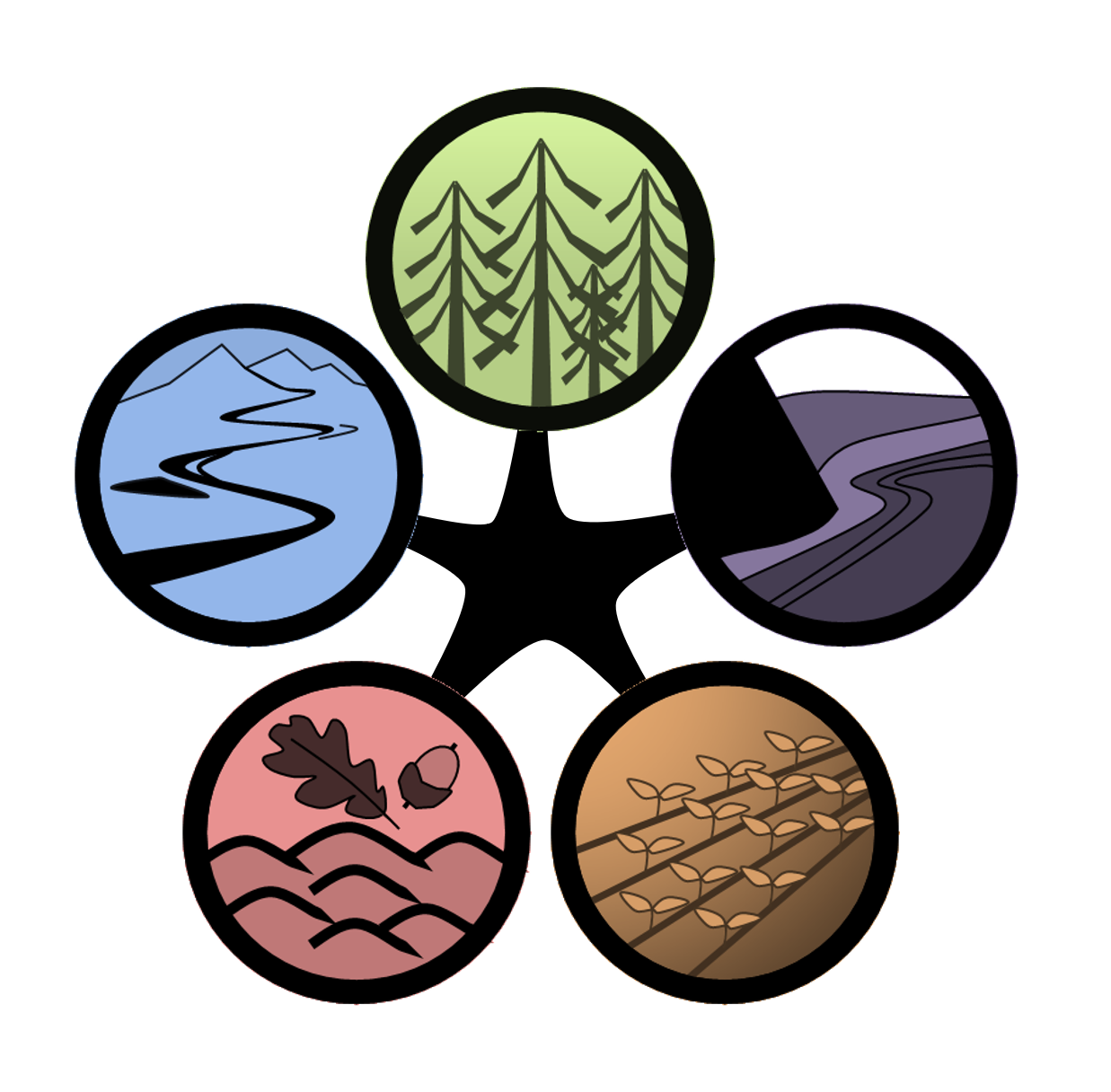
An experimental product that maps various legal "obligation chains" from code through regulation, policy and practice, to effects on ecosystem services. This effort aims to map the social, political and legal drivers that come to bear on the gain or loss of ecosystem service provision. An ecosystem service framing aims to integrate across agencies and authorities to create coherent effects, rather than production of siloed efforts with unintended feedback loops.
Areas of contiguous forest canopy including under production management, providing both timber and non-timber products, regulating carbon and water cycles, and providing habitat corridors and islands to support biodiversity.
The land base with potential to support agricultural production to provide essential goods and services, support food production culture, strengthen food sovereignty, and sustain agricultural ecosystems.
Surface expression of freshwater including wetlands streams and rivers and adjacent lands to produce salmon smolts and support biodiversity, provide swimmable water and harvestable shellfish, and regulate floods and provide for beneficial use of water.
Beaches and Embayments along saltwater shorelines, up to the extent of tidal influen to provide for biodiversity and fishery nurseries, harvestable shellfish and swimmable water, and provide aesthetic and cultural benefits.
Area of historical prairie ecosystems, where cultural fire sustains a globally endemic species and vegetation anhd cultural harvest while managing for fire resilience.